

Technology
Leave it to an LLM, or check it by rules? PersonalCast checks by fixed calculations and rules.
01
Fully logical processing
Checking weather, sunlight, time, position, terrain and buildings is done only by calculations with a fixed procedure. The same forecast data gives the same result however many times you calculate.
02
Generative AI handles only the words
For trips and tours, generative AI handles only three things, all about words: turning itinerary sentences and documents into calculation instructions, changing an itinerary from words (changes are marked and can be undone), and turning the facts from the calculation into the sentences of a report. Numbers are made only by the calculation, and the generative AI runs on our own server. Infrared inspection of building walls does not use generative AI.
03
Turn all the data we hold into an asset
Forecasts, observations, history, terrain, buildings and regulations are read from a single catalog. Of 79 items in the catalog, 66 are used and 13 are deliberately not used, each with a reason.
From request to answer
Request
Tell it the work conditions, places and itinerary, by form and map, or by a sentence or documents such as an itinerary.
Words to instructions
The generative AI turns an itinerary sentence or a document (PDF, image, Word, Excel and more) into a fixed-format instruction and chooses among candidate place names. Changes made in words are applied to the table too. A person can correct it.
Set against data
Published values, terrain, buildings and the sun’s position are set against your conditions by fixed calculations and rules. No numbers are handed to the generative AI.
Values, criteria and the conclusion
For each time, it lines up what is “recommended” (“fits” for trips and tours), “borderline”, “outside” or “cannot be checked”, and makes the conclusion and notes from values and criteria by a fixed procedure.
Facts into sentences
Writes the “what to prepare for each time slot” part of a report from the facts produced by the calculation. Numbers are inserted, and if a check fails it falls back to fixed sentences.
Answer
For infrared: a 14-day calendar, a grid for the day, 3D and a three-page A4 inspection report. For trips: a table for each leg, a map and a report for guides.
Amber dashed frames are the generative AI; navy cards are the fixed calculations. No numbers, and no ○/× conclusions, are produced by the generative AI. The sentences of a trip and tour report are written by the generative AI from the facts produced by the calculation, with numbers inserted from the calculation. Infrared inspection of building walls does not use generative AI.
About 27.65M
buildings in the data (PLATEAU, 307 municipalities)
66 items
of data used (79 in the catalog)
About 9,200
automated tests run (as of Nov. 9, 2026)
Same result
from the same forecast data, every time
Compared with having generative AI read the same weather data
| Compared with having generative AI read the same weather data | A system that leaves it to an LLM | PersonalCast |
|---|---|---|
| Who analyzes the weather? | Generative AI (LLM) | Fixed calculations and cultivated rules |
| How could the analysis go wrong? | Analysis mistakes, terminology mistakes and many other kinds | Values and criteria sit side by side, so an error can be traced and fixed |
| If you enter the same data? | The answer may change | The same forecast data always gives the same result |
| What does the LLM do? | Everything from analysis to writing is a black box | Turns words into instructions and results into sentences. Numbers come from the calculation |
Who analyzes the weather?
A system that leaves it to an LLM
Generative AI (LLM)
PersonalCast
Fixed calculations and cultivated rules
How could the analysis go wrong?
A system that leaves it to an LLM
Analysis mistakes, terminology mistakes and many other kinds
PersonalCast
Values and criteria sit side by side, so an error can be traced and fixed
If you enter the same data?
A system that leaves it to an LLM
The answer may change
PersonalCast
The same forecast data always gives the same result
What does the LLM do?
A system that leaves it to an LLM
Everything from analysis to writing is a black box
PersonalCast
Turns words into instructions and results into sentences. Numbers come from the calculation
"The answer may change" on the left is a general property of generative AI and has not been verified in our papers.
Only four answers
Recommended
Within your conditions. The trips and tours screen shows this as “Fits”.
Borderline
Right at the edge of your conditions.
Outside
Outside your conditions.
Cannot be checked
Shown together with the reason.
The “recommended hours” are the hours in which all the conditions you set are within range (including △ borderline hours). They are not a forecast: they are the result of checking forecasts published by the Japan Meteorological Agency and others against the conditions you set. We do not make overall scores or rankings. When data is missing, or the day is outside the period for which published values are available, we say "cannot be checked" and give the reason. Warnings and advisories not yet issued are marked "check on the day". Zero hits and unchecked are never shown the same way.
Data we use

Forecast data from around the world
Numerical forecasts from the Japan Meteorological Agency, ECMWF and NOAA are acquired continuously. Values from overseas weather models are for reference and are not values published by the Agency.
Data distributed by the Japan Meteorological Agency
We purchase data from the Japan Meteorological Agency for a fee, and have received it since September 2026.
Buildings
About 27.65 million buildings from the PLATEAU data of Japan's Ministry of Land, Infrastructure, Transport and Tourism (307 municipalities). Shadows from surrounding buildings can be considered only where this data exists.

Terrain and maps
Elevation, mountain ridgelines, maps and photographs from the Geospatial Information Authority of Japan.
Photo credits(4 photos)
- Earth Eastern Hemisphere / NASA / Public domain
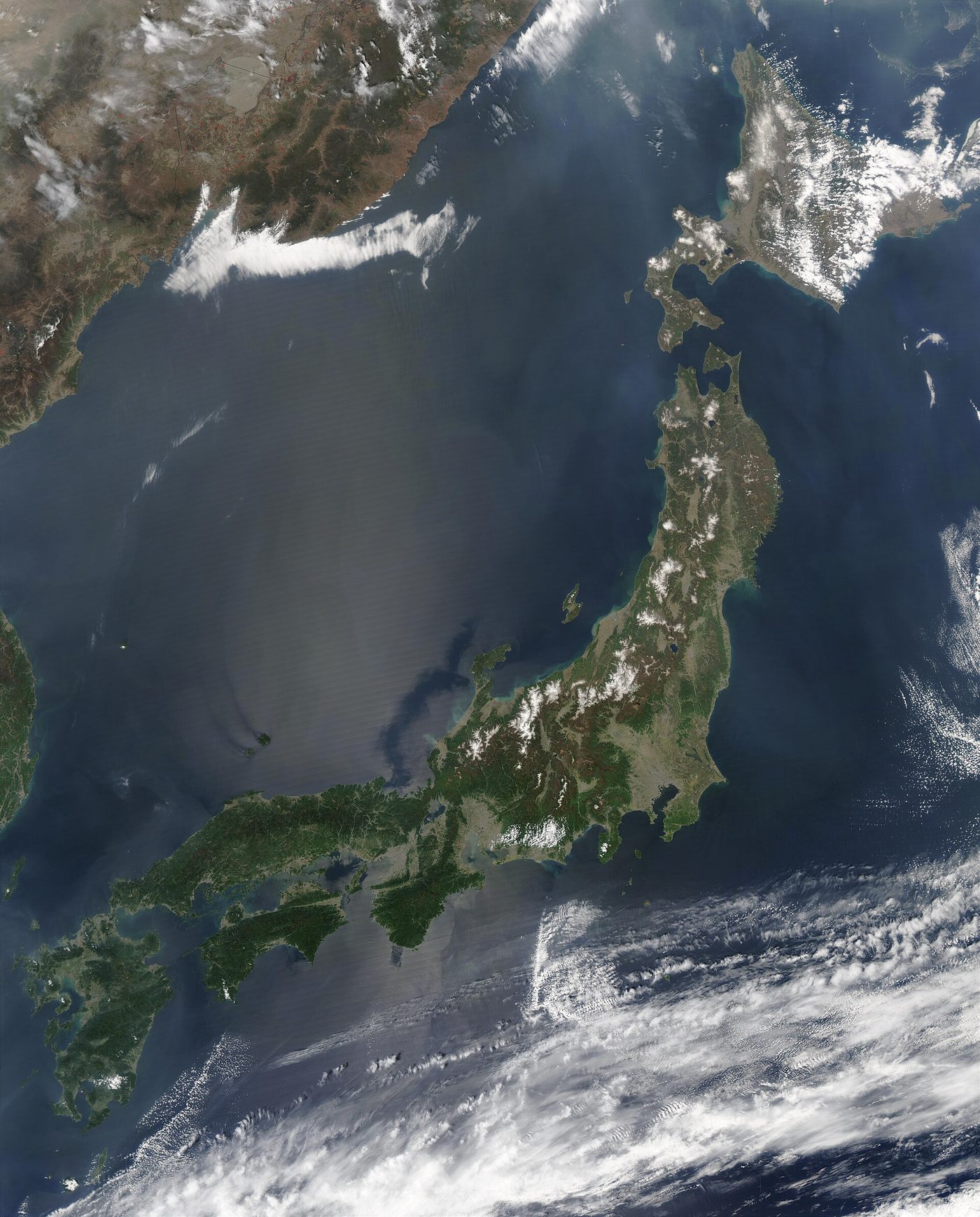
- Satellite image of Japan in May 2003 / Jeff Schmaltz, MODIS Rapid Response Team, NASA/GSFC / Public domain
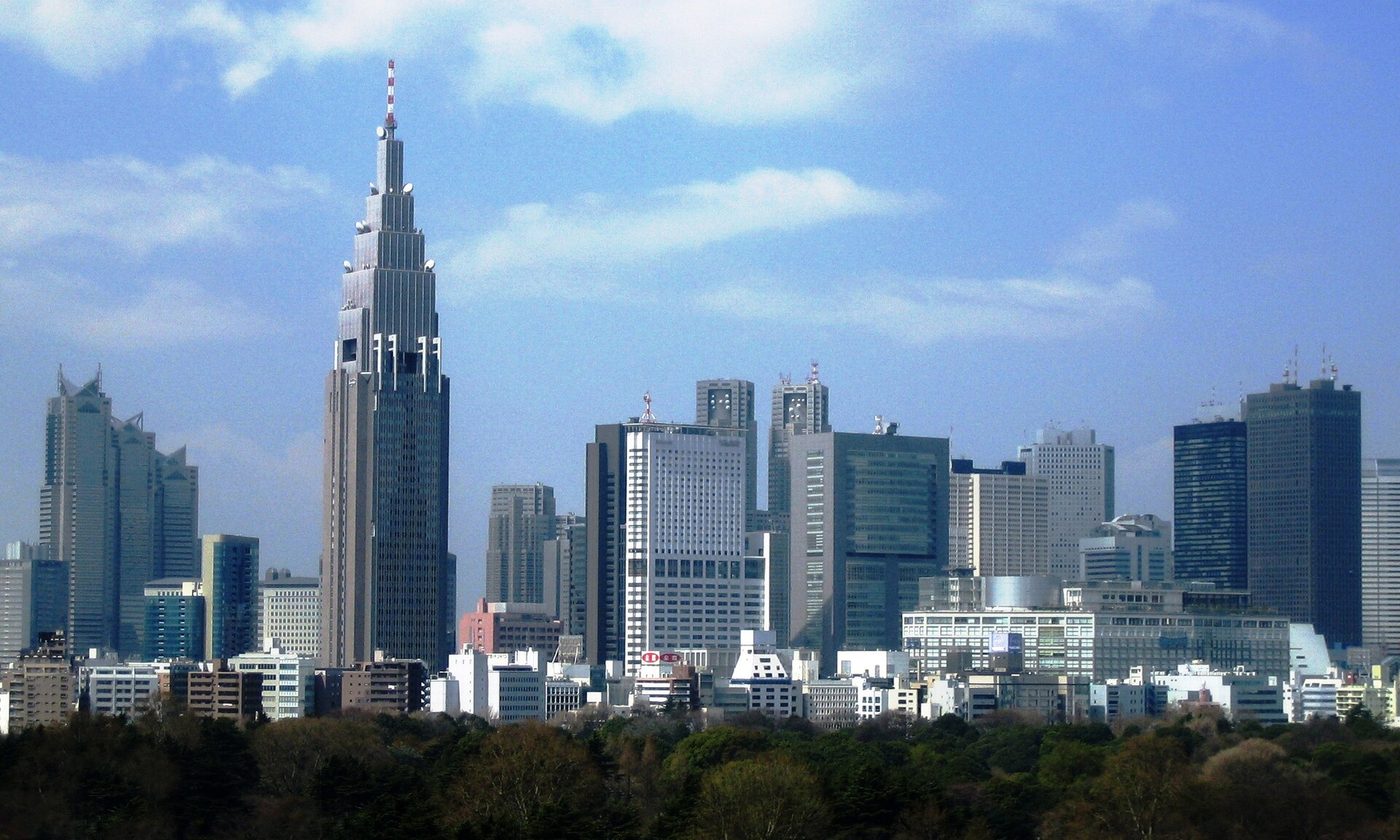
- Skyscrapers Shinjuku 2007 / Itoshin87 / Public domain
- Mount Fuji from the ISS (ISS019-E-05286) / NASA / Public domain
Photos are used from Wikimedia Commons and other sources within their licenses, and are cropped.
What we hold to
- We do not make go/no-go calls, rankings or our own forecasts. People decide; the software lines up values, criteria and sources.
- Grid-point values published by the Japan Meteorological Agency and others are never interpolated in place or time. We add the distance and direction to the nearest point. For days beyond the reach of the Japan Meteorological Agency’s forecast, we use the middle value of its ensemble forecast (51 members), with a label saying so.
- Shadows in 3D are the shadows of a clear day (a geometric calculation). We do not use generative models that draw clouds or rain.
- Every page of a result carries the source of the values and a notice.
- Instructions read by generative AI carry a mark wherever a value has no basis, so that a person can correct them. Rows changed in the chat are also marked, and one change can be undone as a whole.
Relation to the Meteorological Service Act
We do not create future weather values to show to others. We quote values published by the Japan Meteorological Agency and others as they are, with their sources, and only check them against your conditions. We have consulted the Agency since the design stage, and received the reply that a design which shows published values as they are, without adding our own predictions, does not count as a forecasting business (July 2026). That reply concerned a different design, and we were asked to consult again once the implementation is settled.
Values are those published by each agency, or grid-point values. PersonalCast does not make its own forecasts. This is not a go/no-go judgment. Please make the final check with the official sources.